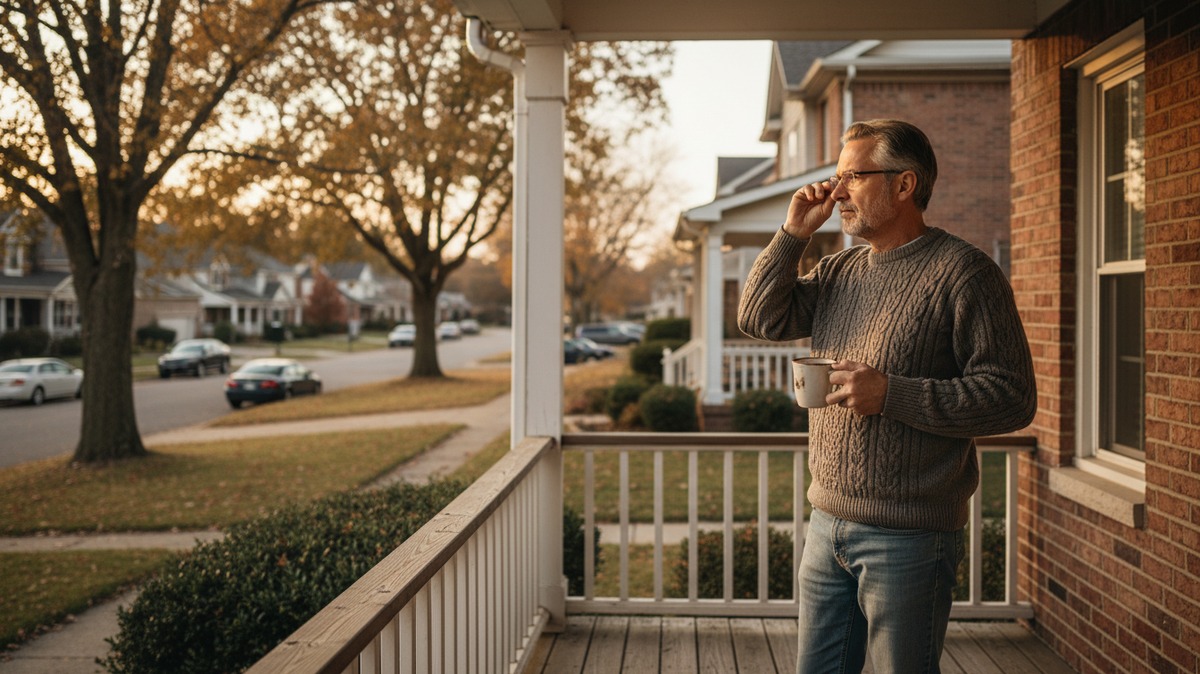
Homeowners on Your Street Are Paying $900 Less Per Year for the Same Coverage
Same neighborhood. Same home size. Same coverage. Different carrier. The price gap between what you pay and what's available might be bigger than you think.
Check Rates in My AreaFree. 2 minutes. See what others near you are paying.
This is the part nobody talks about at the block party.
Two houses on the same cul-de-sac. Built the same year. Same square footage. Same coverage limits. One homeowner pays $2,850 a year. The other pays $1,960.
The difference isn't a better deal. It isn't a special connection. It isn't luck. The homeowner paying $890 less did exactly one thing the other didn't: she checked.
Not on a whim. Not because something went wrong. She checked because her premium went up at renewal, and instead of shrugging and paying it, she spent two minutes comparing what other carriers would charge for the same home. What she found wasn't a marginal difference. It was nearly $75 a month.
What happens when five homeowners on the same street compare
This is a composite, but it's based on what multi-carrier comparisons typically reveal for homes in the same zip code, same age, same coverage:
📍 Same street, same coverage — five different rates
This pattern repeats in neighborhoods across the country. The only variable isn't the home — it's whether the homeowner has compared recently. Those who have are paying less. Those who haven't are subsidizing the discounts carriers give to new shoppers.
Where do you fall on this list?
If you haven't compared in the last 12 months, the answer is probably closer to Homeowner A than Homeowner D.
Check My RateSee what's available in your zip code. Free. No obligation.
Why the gap exists — and why your carrier won't close it
Insurance pricing isn't like a gas station where the price is on the sign. Two carriers can look at the same house and come up with rates that differ by 40% or more. They use different risk models, different profit targets, different appetite for your specific area.
That means at any given moment, there's almost certainly a carrier that would charge you less for the same coverage. The problem is you'd never know unless you checked — and your current carrier has zero incentive to tell you.
Think about it from their side: if you're paying $3,100 a year and a competitor would offer the same coverage for $2,200, your carrier doesn't benefit from telling you that. They benefit from you not knowing.
And even among homeowners who sense they might be overpaying, 77% only compare one or two quotes when they do look. That's barely looking. It's like checking one neighbor's mortgage rate and concluding yours is fine. The homeowners in the $2,160/year column — the ones paying the least — ran a real comparison across five or more carriers. The ones in the $3,140 column either never checked, or checked once and stopped too early.
The 1 in 4 who switched didn't find some hidden trick. They did the same two-minute comparison you're about to do. The other three are still paying whatever their carrier decided to charge them.
What happens when you check
- 1Select your state. Rates vary dramatically by location — sometimes by 30%+ between neighboring zip codes.
- 2Enter basic property info. Home size, year built, coverage level. Takes about 90 seconds.
- 3See rates from multiple carriers side by side. Each quote is for equivalent coverage. You see the numbers. You compare. If your current rate is competitive, great — you've confirmed it. If it isn't, you now have options you didn't have two minutes ago.
That's it. No phone call. No commitment. No one contacts you unless you ask them to. You just get the information — and the information is usually worth $500 to $2,000 per year.
Here's the question that should bother you: If your neighbor is paying $900 less for the same coverage on the same street — and you could find out whether you're in the same position in two minutes — why wouldn't you check?
The only reason not to is if you're confident your rate is already the best available. But if you haven't compared in the last 12 months, that confidence is based on nothing but inertia. And inertia is expensive.
Your neighbors already checked. Some of them switched. The rest are saving the comparison for "later."
Later costs about $75 a month.
Check Rates in My AreaFree. 2 minutes. No phone call.
Select Your State
Click your state to see what homeowners near you are actually paying.